
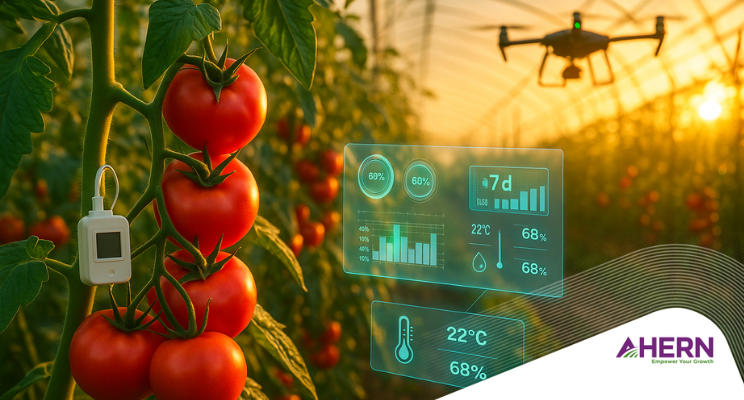
Artificial Intelligence (AI) is no longer a futuristic promise, it has become a driving force of transformation across multiple industries.
In the agricultural sector, its implementation has proven to be a powerful tool for optimizing processes, reducing costs, and improving sustainability.
In this context, Mexico is facing a historic opportunity to leverage technological advances for the benefit of its agricultural sector.
In the United States, the adoption of AI-based technologies is already marking a turning point in agriculture.
Solutions such as IoT sensors, automated drones, and data analytics platforms enable producers to monitor crop health in real time, anticipate pest issues, optimize irrigation and fertilization, and maximize the yield of every hectare.
This trend not only improves operational efficiency, it also promotes more sustainable and results-oriented agriculture.
The most relevant application areas of artificial intelligence in the agricultural field include:
To accelerate the digital transformation of Mexican agriculture through artificial intelligence, it is essential to consider:
In conclusion, artificial intelligence represents an unprecedented opportunity to modernize the agricultural sector in Mexico. Its adoption should not be understood as an end in itself, but rather as a means to strengthen the competitiveness, sustainability, and resilience of agriculture. The challenge is not solely technological, but structural: it requires cross-sector collaboration and a long-term vision to ensure that the benefits of this technological revolution reach every stakeholder within the agricultural ecosystem.