
Agriculture is undergoing a period of profound transformation. Today, food production no longer depends solely on field yields, but on the ability to make better-informed, more precise, and timely decisions. In this context, digital agriculture has become one of the most important tools for addressing the sector’s production, environmental, and commercial challenges.
More than just a technological trend, digital agriculture represents a new way of understanding the field: an approach to farming that measures, analyzes, and acts based on reliable information.
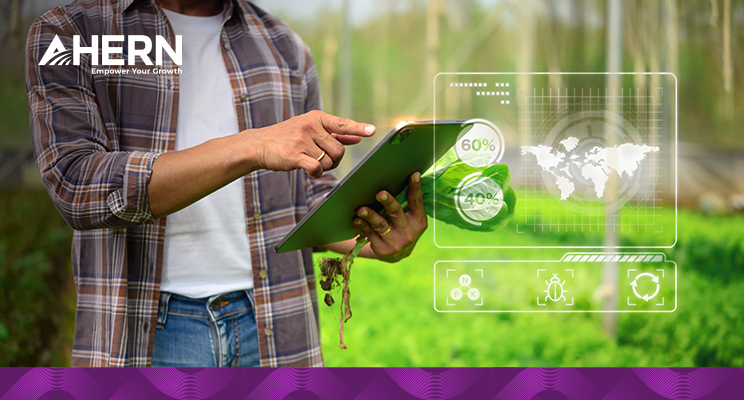
Digital agriculture relies on the use of technologies and tools that enable the collection and analysis of crop data in real time or near real time. Soil and weather sensors, satellite imagery, digital monitoring platforms, and automated systems provide a clearer picture of what is happening at every stage of the agricultural cycle.
Its main benefit is reducing uncertainty. With accurate information, growers can adjust risks based on the crop’s actual needs, optimize nutrition, anticipate weather risks, or detect stress and health issues before they lead to major losses.
Instead of reacting too late, digital agriculture allows for timely action.
One of the greatest contributions of digital agriculture is the optimization of resource use. Measuring soil moisture prevents unnecessary risks; monitoring nutrient levels reduces over-application; analyzing field variability allows inputs to be applied only where they are truly needed.
This translates into concrete benefits:
Efficiency is no longer dependent solely on experience but is now backed by data
Digital agriculture does not replace sustainable agriculture; it makes it possible in practice. Thanks to constant measurement and monitoring, responsible practices can be continuously evaluated and adjusted.
When farmers know exactly how their crops respond, it becomes possible to maintain productivity without compromising the soil, water, or the environment. In this sense, digitalization becomes an enabler of more responsible and sustainable agriculture, aligned with current market and environmental demands.
The future of agriculture does not lie in choosing between tradition or technology, but in integrating them intelligently. The farmer’s experience remains key, but today it is strengthened when combined with data, analysis, and digital tools.
Digital agriculture allows for greater certainty in production, better planning of each cycle, and agile responses to environmental changes. It is a tool that drives efficiency, profitability, and sustainability simultaneously. Moving toward digital agriculture means moving toward a farming sector better prepared for the challenges of the present and the opportunities of the future.
Sources: OECD: The Digitalisation of Agriculture, OECD: Innovation, Agricultural Productivity and Sustainability, SADER: Agricultura Sostenible (México), European Commission: Digitalisation in Agriculture