
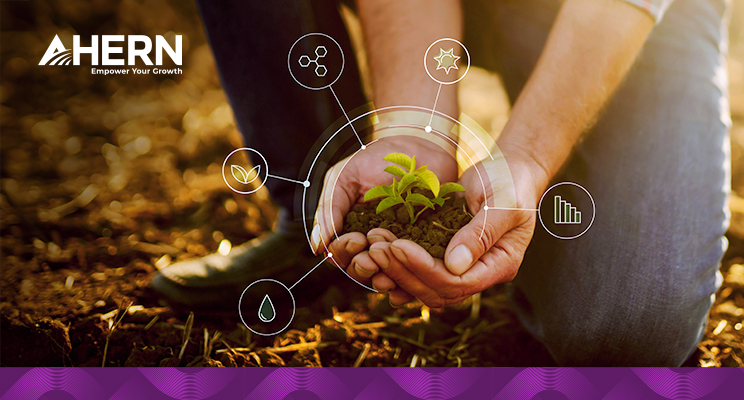
Regenerative agriculture has evolved from an emerging concept to a key strategy to address global challenges such as climate change, land degradation and food security. By 2026, this approach is established as an effective way to restore soil health, increase agricultural productivity and strengthen ecosystem resilience.
More than one third of the planet’s soils are degraded and billions of tons of fertile topsoil are lost every year. Against this backdrop, regenerative agriculture not only halts the damage, but also revitalizes agricultural ecosystems, benefiting both the environment and the producer.
Internationally, regenerative agriculture has gained traction in government agendas, corporate initiatives and scientific platforms. The Coalition for Action for Soil Health (CA4SH) is leading a global agenda to promote practices that restore soil vitality, while summits such as COP28 have recognized regenerative agriculture as a pillar for achieving climate neutrality.
Global agri-food companies have adopted these principles, and organizations such as the Rainforest Alliance have launched specific standards to certify regenerative products. In 2026, the first coffees with the “Regenerative” seal are reaching the market, demonstrating the move towards more sustainable value chains.
The implementation of practices such as no-tillage, cover crops and holistic grazing management is generating proven positive impacts. According to the IPCC, these practices can sequester carbon, reduce erosion and improve fertility without sacrificing productivity.
Farmers who have incorporated these methods report benefits such as increased water retention, increased organic matter and reduced dependence on agrochemicals. Some estimates indicate that regenerative practices can increase income by 20% to 30% by reducing costs and accessing differentiated markets.
Companies such as Danone and General Mills have invested in regenerative programs with their suppliers, demonstrating that regenerative agriculture is also viable on a corporate scale. Studies show that combining multiple practices improves soil health and maintains yields.
Soil is the foundation of any agricultural system. Its health determines the field’s ability to produce food, store water and sequester carbon. In a context of climate change and food insecurity, restoring soils is essential to ensure stable yields and resilience to drought or heavy rains.
Currently, the planet’s soils store 2 gigatons of CO₂ per year. Expanding this sink through regenerative practices is one of the most effective climate mitigation strategies. In addition, diversified crops, agroforestry systems and regenerative livestock farming promote a more balanced and productive agricultural ecosystem.
It is important to emphasize that the transition must be guided by technical evidence. There are no universal solutions: practices must be adapted to each region and type of crop. Some studies indicate that if carbon sequestration is the only priority, yields may be affected. Therefore, technical assistance, monitoring and training are needed to achieve a balance between productivity and regeneration.
At Ahern, we firmly believe in the potential of regenerative agriculture to transform the future of the countryside. Our commitment to agricultural innovation includes the promotion of sustainable practices, regenerative technologies and solutions tailored to the needs of farmers in Mexico and Latin America.
We promote soil health, biodiversity and the responsible use of resources. We are convinced that agricultural growth and environmental regeneration can-and must-move forward together.Regenerative agriculture is much more than a trend: it is a sound strategy for meeting the challenges of the 21st century. And 2026 represents a key opportunity to scale these solutions technically, cost-effectively and responsibly. At Ahern, we will continue to join forces to drive agriculture from its roots.
Sources: FAO, IPCC, UN (UNFCCC), Nature, Rainforest Alliance, The Carbon Underground, World Resources Institute.