
In Mexico, the saladette tomato has established itself as one of the most important strategic crops for the national agri-food economy. In addition to being a staple in the Mexican diet, it is one of the country’s leading vegetable exports and a key driver for thousands of farmers who rely on protected agriculture and high-yield tomato seeds to remain competitive.
Mexico is currently the world’s leading exporter of fresh tomatoes, shipping approximately 1.5 million metric tons per year—a figure that represents nearly 50% of its total production. This international leadership can be attributed to the country’s proximity to the U.S. market, its year-round production capacity, the growth of greenhouse tomato cultivation, and the incorporation of advanced genetics, which has enabled the development of increasingly productive hybrid varieties.
In addition, tomatoes are one of Mexico’s most valuable agricultural exports, strengthening the agri-food trade balance and cementing the country’s position as a global leader in horticultural production.
One of the factors that has most driven the competitiveness of saladette tomatoes is the genetic evolution of hybrid varieties. Currently, growers are seeking tomato seeds that offer higher yields, greater uniformity, disease resistance, and adaptability to different growing conditions. This pursuit of efficiency has made tomato genetics one of the most important tools for agricultural profitability.
In this context, the Saladette SVTE8444 tomato variety from Bayer Seminis, available through Ahern, has become an important solution for growers seeking to maximize productivity and market quality. Developed by Bayer Seminis in collaboration with geneticist Amit Hotzev, this hybrid was created to meet the demands of the Mexican market, taking into account the needs of both farmers and end consumers.
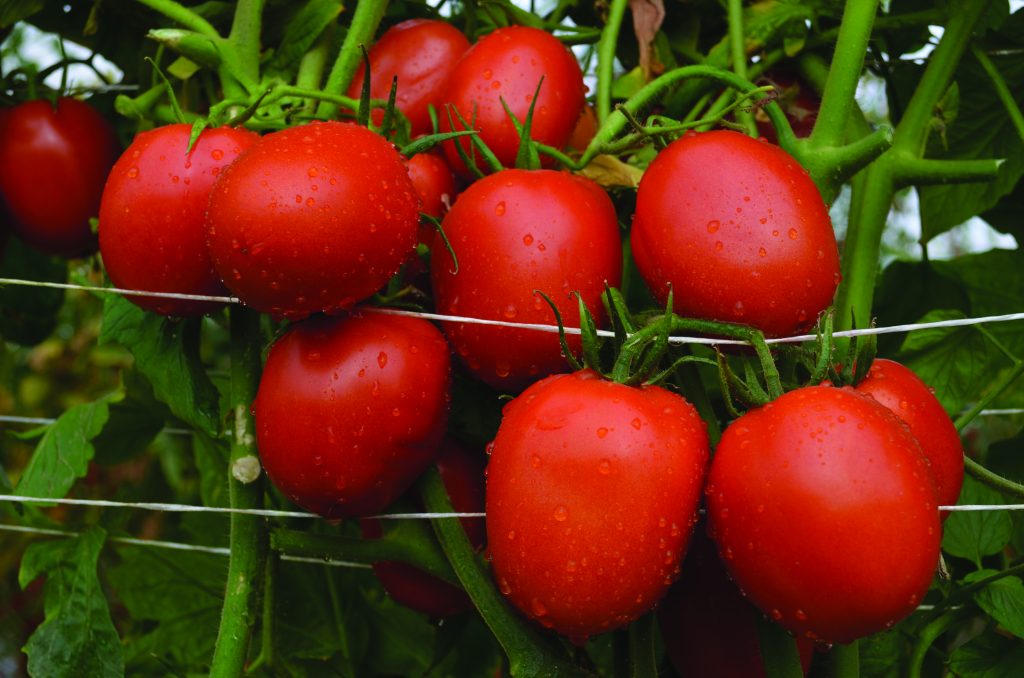
Thanks to its vigor, vine-training capacity, and fruit uniformity, SVTE8444 has demonstrated outstanding performance in protected agriculture and intensive production systems. Among the characteristics most valued by growers are its high fruit uniformity throughout the entire production cycle, its excellent firmness and postharvest life, its adaptability to different production windows, and its good performance under stressful conditions.
Added to this is its potential to achieve high yields per hectare and a commercial quality geared toward export markets—attributes that have helped position it as an attractive option for those seeking tomato hybrid varieties that prioritize productivity and consistency.
The demand for high-yield tomato seeds continues to grow due to the need to remain competitive in increasingly demanding international markets. Therefore, the selection of specialized agricultural seeds plays a key role in crop profitability and in the ability to respond to the sector’s current challenges.
Ahern continues to strengthen its focus on genetic solutions for vegetable growers through exclusive varieties tailored to the real needs of the field. The incorporation of advanced genetics makes it possible to address challenges such as disease pressure, export requirements, and the need to maximize productivity per hectare.
Today, the Saladette tomato represents much more than a traditional crop: it is an economic pillar of Mexico’s agri-food sector and an example of how innovation, protected agriculture, and high-yield tomato seeds are transforming the future of agriculture. In this context, varieties such as SVTE8444 reflect the impact that tomato genetics can have when combined with technical expertise and a vision focused on producing more and better crops.